
Cherokee County Arrest Records and Court Charges
Arrest records document the arrest and booking side of an incident. In Cherokee County, that information may be tied to the Cherokee County Sheriff's Office, city police departments, the jail roster, arresting agency fields, booking number, booking date and time, charges shown at booking, and bond information. The sheriff roster is useful for custody and booking detail, but the roster warning says charges and bail amounts can change after court appearances.
Court charge records are different. After an arrest or referral, the County Attorney decides whether to file formal charges for state offenses, and municipal prosecutors handle city ordinance cases. Once the charge is filed, the charge becomes part of the court case. For the final case record, disposition, and sentence, use the full Cherokee County criminal court records file. For booking custody detail, use the jail roster and inmate records path.
The Cherokee County Attorney diversion page shows how some filed charges may move away from ordinary prosecution if a person is approved and completes all terms.
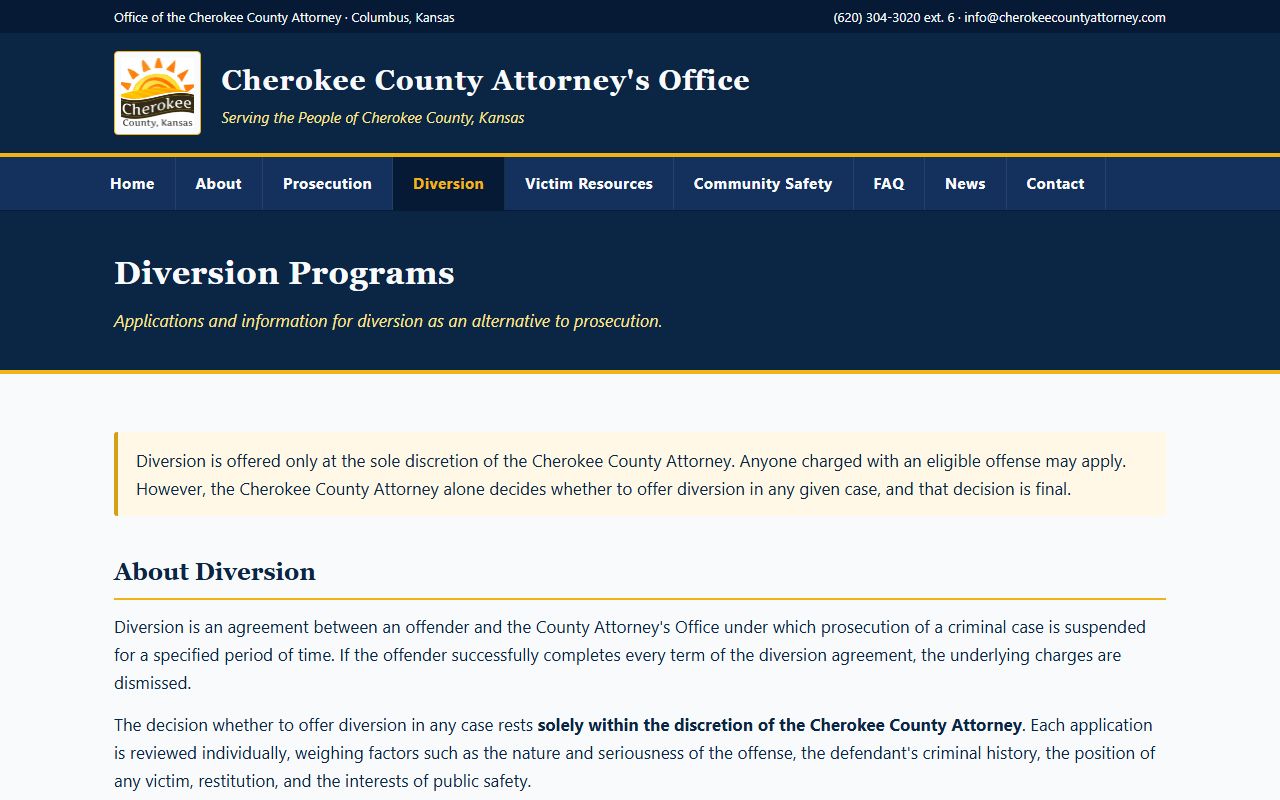
Diversion is not an arrest record and not a conviction by itself, but it can change how a filed charge is resolved in court.
Find Cherokee County Arrest Records
Use more than one channel because arrest and charge data is split among agencies. The sheriff roster can show booking and custody information. Kansas Case Search can show district court charges and docket events when public. The Clerk of the District Court handles written requests for district court copies. Columbus and Galena municipal courts should be checked for city tickets, ordinance cases, and municipal misdemeanors. KBI criminal history is a statewide paid record check, not a substitute for the local case file.
- Check the sheriff roster or custody tools first when the question is whether a person was booked into the county jail.
- Search Kansas Case Search by defendant name, case number, or citation for district court charges.
- Contact the municipal court named on a city citation if the case is local ordinance or city traffic.
- Read each charge's status because one arrest can produce multiple charges with different outcomes.
- Request copies from the District Court Clerk when a certified charge, disposition, or sentencing entry is needed.
The KBI registered offender site is another state system, but it is not a general arrest-record database and should not be used as a stand-in for court charges.
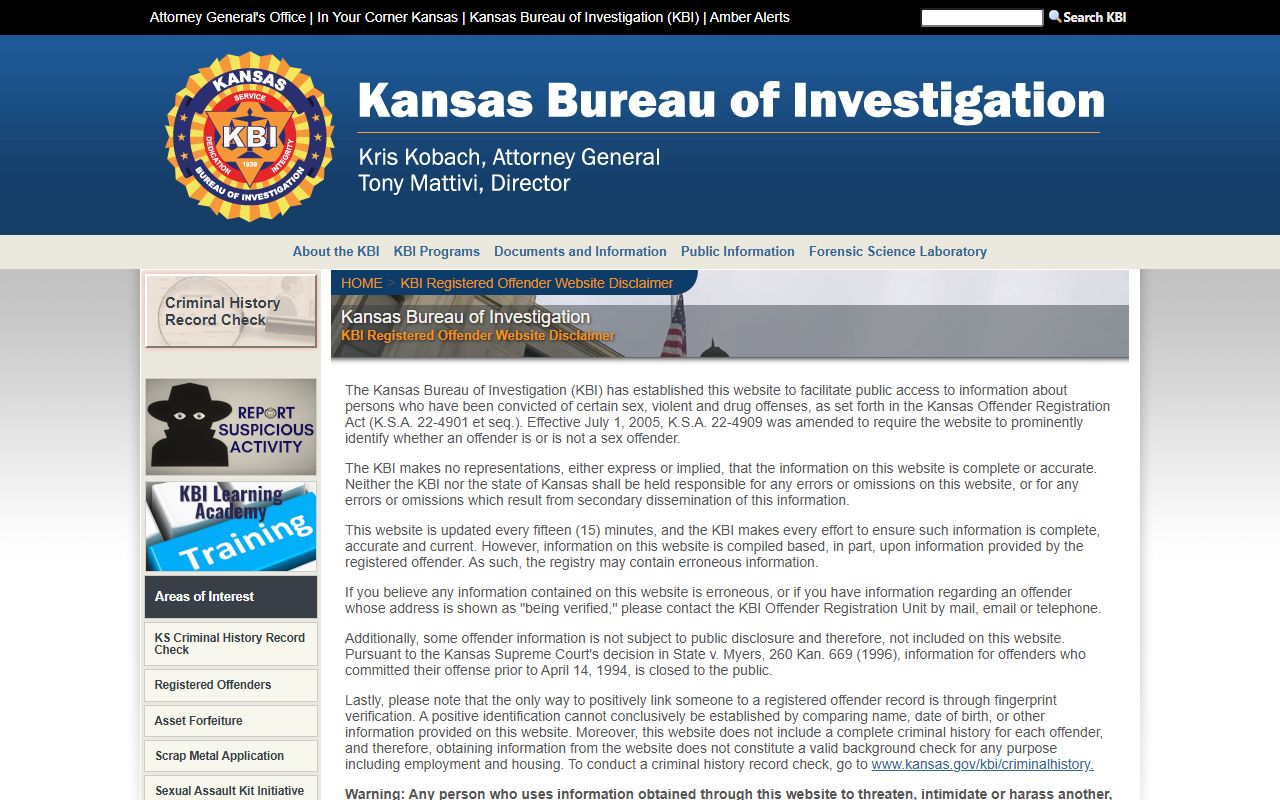
State registry tools answer narrow statutory questions; Cherokee County charge status comes from the court case and prosecutor filing path.
Charges After Arrest in Cherokee County
Formal charges after arrest usually begin with a charging document. Kansas criminal records use terms such as complaint and information, and the broader legal term indictment may apply in some criminal systems. The research for Cherokee County identifies complaint and information as common criminal court record components. A filed charge is an allegation until the court enters a disposition. The County Attorney's charging decision is separate from the arresting officer's booking entry.
| Document | Filed By | What It Does | Local Use Point |
|---|---|---|---|
| Complaint | Officer or prosecutor, depending on case type | States alleged facts or offenses and can begin a criminal case. | May appear early in district or municipal criminal files. |
| Information | Prosecutor | Lists formal charges filed by the state after review. | Common in Kansas district court criminal case files. |
| Indictment | Grand jury | Accuses a person after grand jury action. | Included as a charging-document type, but not documented as a routine Cherokee County path in the research. |
Cherokee County Charge Status
Charge status can change as the case moves. A jail roster may list the charges known at booking, then a prosecutor may file different formal charges. Later, a charge may be amended, reduced, dismissed, diverted, or resolved by plea or trial. Read the latest docket events and disposition for each count before treating a charge as final.
| Status | What It Means |
|---|---|
| Pending | The charge is active and has not yet reached final disposition. |
| Amended | The prosecutor or court record changed the charge, wording, count, or severity. |
| Reduced | The charge was lowered to a lesser offense or severity level. |
| Dismissed | The charge was ended without a conviction on that count. |
| Diversion | Prosecution is suspended under an agreement, with dismissal possible after successful completion. |
| Convicted | The defendant was found guilty or entered a guilty or no-contest plea accepted by the court. |
Charges vs Convictions
A charge is an allegation. A conviction is a final guilt outcome. This distinction is central to Cherokee County arrest records because a person can be arrested and charged without later being convicted. A case may be dismissed, amended, reduced, diverted, or resolved with only some charges resulting in conviction. The disposition field is the best place to confirm what happened.
| Point | Charge | Conviction |
|---|---|---|
| Legal Meaning | Alleged offense filed after arrest or referral. | Final guilty result by plea or verdict. |
| Where It Appears | Booking data, complaint, information, docket, or criminal history. | Disposition, judgment, sentencing entry, or criminal history. |
| Can Change | Yes, charges may be amended, reduced, dropped, or dismissed. | Less likely, but appeals or expungement can affect public access. |
| Best Proof | Charging document or current docket entry. | Certified disposition or sentencing entry from the court. |
Diversion and Charge Outcomes
The Cherokee County Attorney diversion program is a major local factor for charge records. Diversion suspends prosecution while the person completes conditions. If the terms are completed, the underlying charges are dismissed. The County Attorney says diversion is discretionary, reviewed individually, and based on factors such as offense seriousness, criminal history, victim position, restitution, and public safety. A diversion application is not an admission of guilt and does not guarantee approval.
Research lists diversion application fees of $100 for criminal misdemeanor, $150 for criminal felony, $100 for DUI, $50 for traffic, and $25 for fish and game. Payment must be by cashier's check, money order, or firm check payable to the Cherokee County Attorney Diversion Fee Fund. Personal checks and cash are not accepted. The application must be submitted not more than 30 days after arraignment for misdemeanors or first appearance for felonies, and a signed agreement must be filed at least 14 days before trial or preliminary hearing.
Note: A diversion dismissal can change the charge outcome, but the record still follows Kansas access and expungement rules.
Statewide Charge and History Checks
The Kansas Criminal History Record Check is a fee-based statewide route through Kansas.gov and the Kansas Bureau of Investigation. Research recorded a $30 Kansas.gov purchase price and daily availability from 4:00 AM to midnight Central. This tool is useful when the question is statewide criminal history, but it is not the same as a Cherokee County court file or sheriff booking profile.
Victim and custody notice is another separate channel. Kansas VINE provides custody and case notification tools. The Cherokee County Attorney victim resources page also lists VINE and local victim support contacts. VINE helps with notice, but formal charge status and disposition still need the court case record.

VINE can alert a victim or interested person to custody and case changes, while the court file shows the legal charge history.
Sealed vs Expunged Arrest Records
Kansas law treats sealed records and expunged records differently. A sealed warrant-related criminal or juvenile case may be hidden from public search until a warrant is executed or denied under K.S.A. 60-2617. An expungement under K.S.A. 21-6614 can limit public access to eligible convictions, arrest records, and diversion agreements after the statutory requirements are met.
| Point | Sealed | Expunged |
|---|---|---|
| How It Happens | By statute, rule, or court order. | By court order after eligibility and filing requirements are met. |
| Public Search Effect | May hide a case or event while sealing applies. | Limits public access to eligible records after the order. |
| Examples | Warrant-related case material before execution or denial. | Eligible arrest records, convictions, and diversions. |
| Not the Same As | A dismissed charge. | Total deletion from all government systems. |
The Kansas juvenile intake confidentiality statute is another access limit for arrest and charge records involving minors.
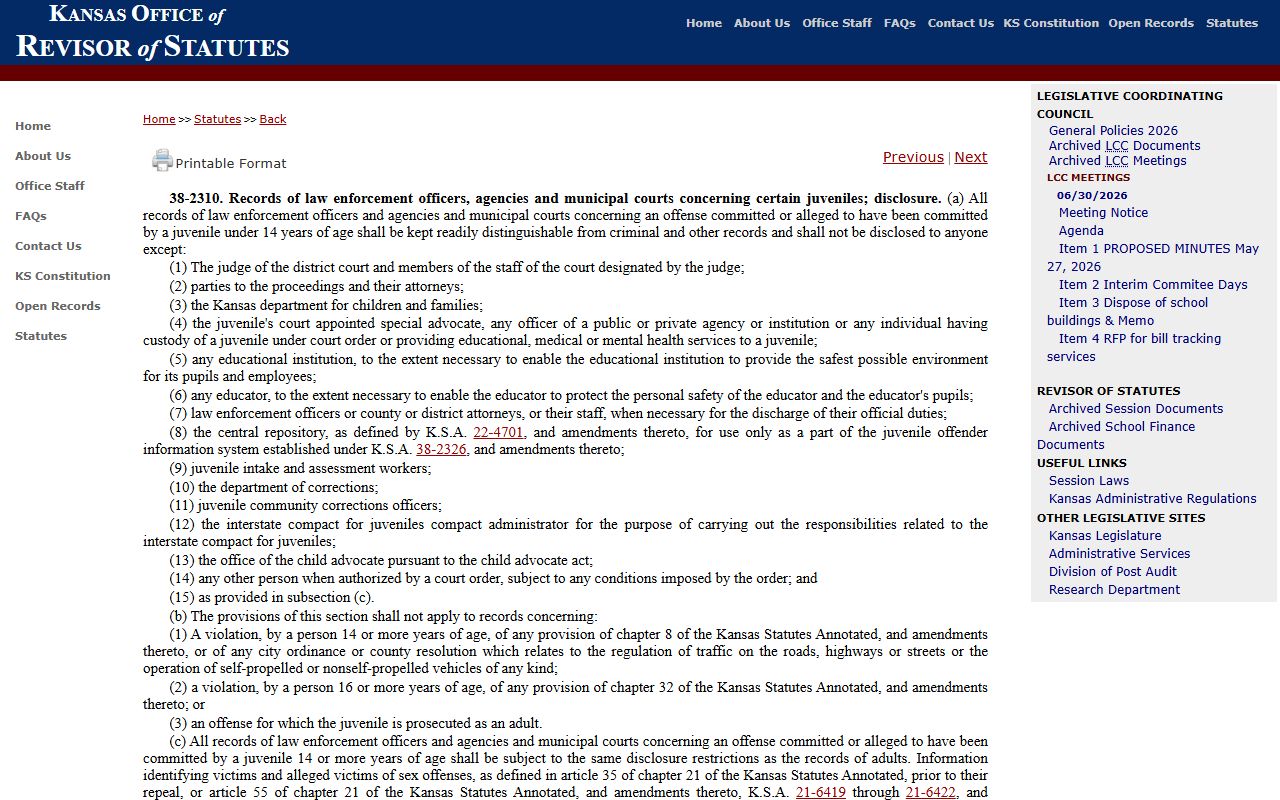
Juvenile confidentiality means a juvenile charge record may not be visible even when a similar adult record would be public.
Expungement rules under K.S.A. 21-6614 are the main Kansas route for eligible arrest records, convictions, and diversions.
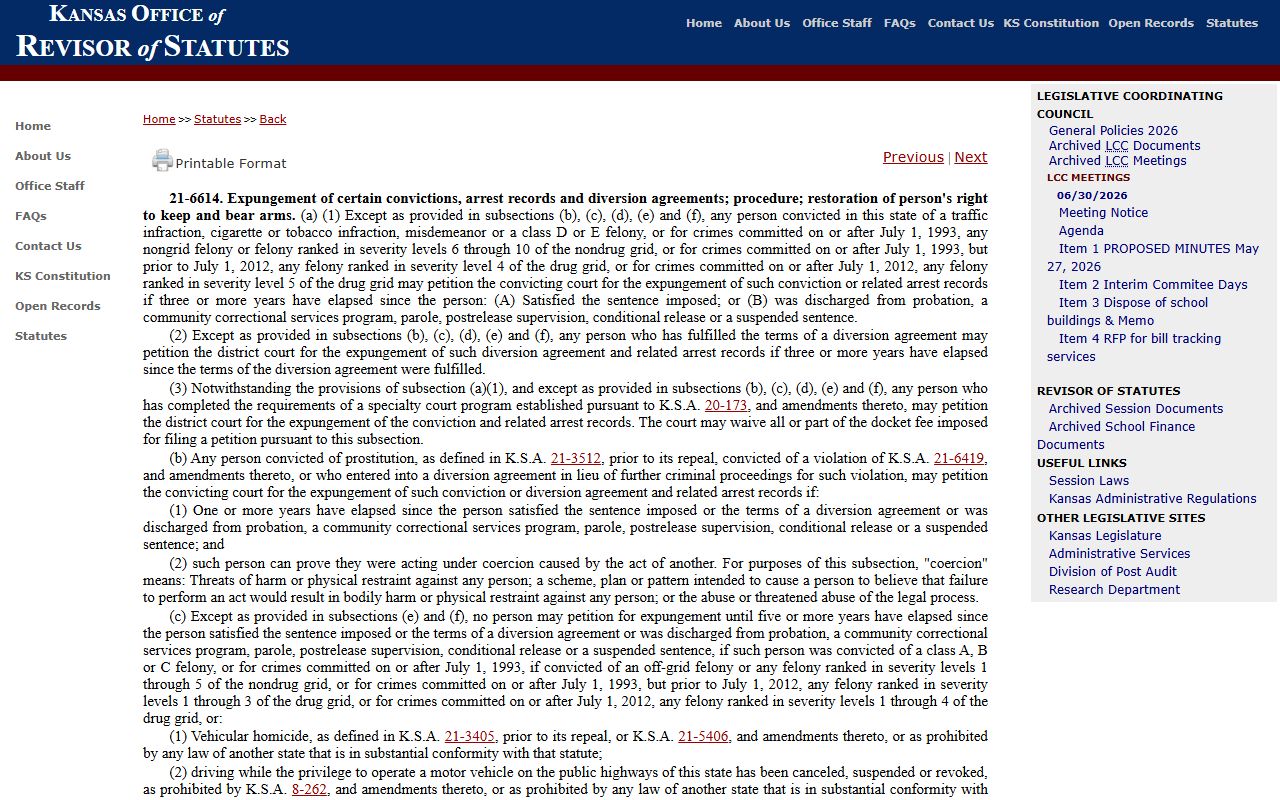
Expungement can limit public access, but some agencies may still have statutory access for specific purposes.
Restricted Cherokee County Charge Records
Restricted charge records include juvenile offender information, child in need of care records, sealed warrant cases, expunged records, protected victim details, minor identifiers, medical or mental-health information, and financial account data. Ongoing investigations may also involve records that are not released through ordinary public channels. A case that cannot be found online may be sealed, held by a municipal court, listed under a different name or case number, or outside district court.
For non-court law-enforcement records, the sheriff's open-records route points users to the county KORA form and County Clerk submission channels. KORA can help with agency records, but it does not override court confidentiality rules or make sealed court charges public. For court charge records, the reliable local custodian is the Clerk of the District Court or the municipal court that handled the case.