
Cherokee County Probate Records Overview
Probate is a function of the Cherokee County District Court because Kansas district courts are the state's general jurisdiction trial courts. The research places Cherokee County in the 11th Judicial District with Crawford and Labette counties. In Columbus, probate matters route through the same District Court Clerk office that handles civil, criminal, domestic, juvenile, small claims, and district-level traffic case records.
Probate files may include wills, petitions, letters testamentary, letters of administration, inventories, creditor notices, accountings, guardianship or conservatorship records, trusts, small-estate paperwork, and final settlements. A public probate index may show that a case exists, but document access depends on court rules, confidentiality statutes, redactions, and whether the requester needs plain copies or certified copies.
Cherokee County District Court
Cherokee County Courthouse
110 W Maple, P.O. Box 189
Columbus, KS 66725
620-429-9500 ext. 1
Written record search requests; public access computer available
Cherokee County Probate Terms
Probate records use words that can affect which document to request. The terms below are basic filing labels, not a decision about what a person should file. When a user needs an order, letter, or certified copy, the exact case term can help the Clerk of the District Court locate the right document.
- Testator
- A person who made a will.
- Executor
- A person named to carry out the will after court authority is issued.
- Intestate
- Dying without a valid will, which can change the estate path.
- Guardianship
- A court case about care and authority for a minor or person needing a guardian.
- Conservatorship
- A court case about managing property or finances for a protected person.
- Certified copy
- A clerk-issued copy formally certified as true.
The child-in-need-of-care confidentiality statute was assigned as a successful probate image because restricted child and family records can overlap with guardianship-related court access limits.
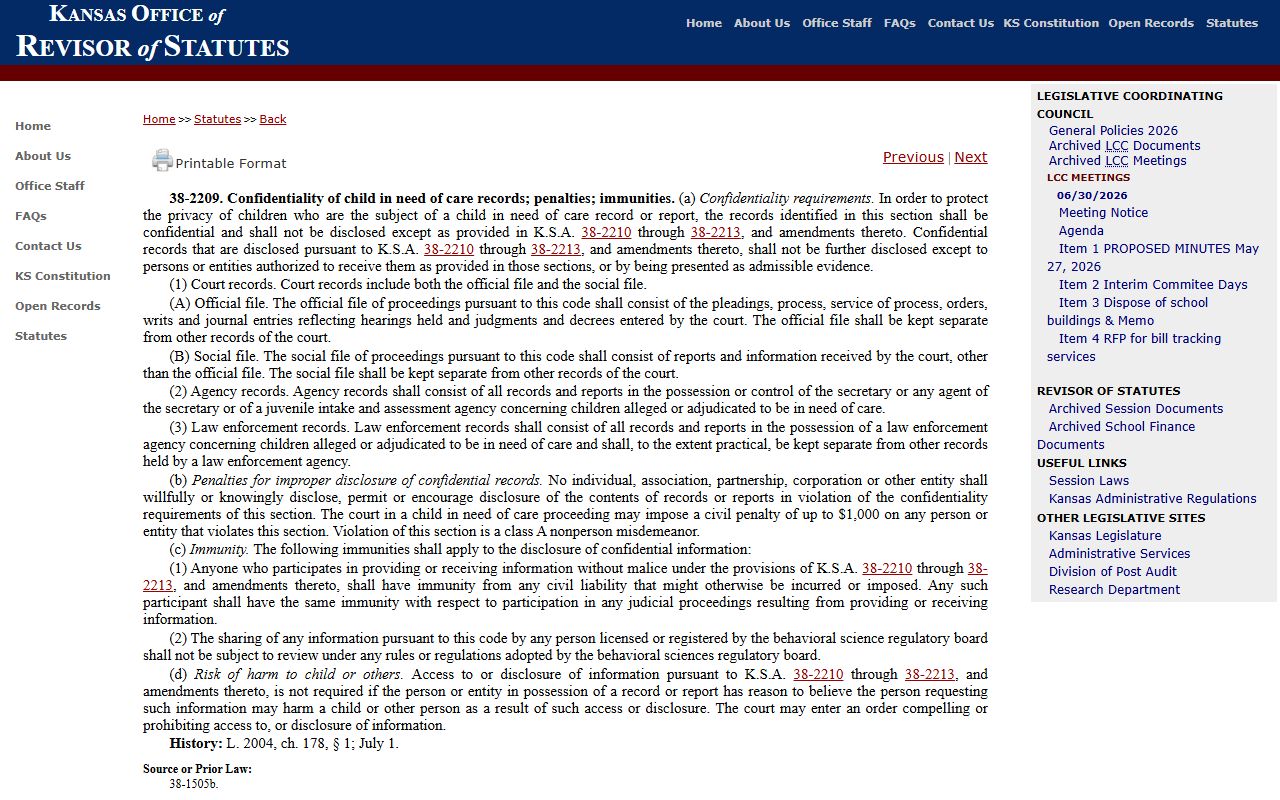
That source reinforces the core access point: not every family or minor-related court record is available through a public probate search.
Search Cherokee County Probate Records
Probate searches should start by deciding whether the need is a case index, a filed document, or a certified copy. Kansas Case Search may show public district court case information by case number, party name, business name, citation, or other criteria available to the user's role. The research notes that automated access to the official CaseSearch site was blocked, so field detail is partial. That does not change the official access path.
- Search public district court information through Kansas Case Search when a case number, estate name, decedent name, or party name is known.
- If online results are incomplete, use the public access computer at the Cherokee County Courthouse if available.
- Send a written request to the District Court Clerk with the decedent, estate name, case number if known, approximate filing date, document name, and copy type.
- Ask whether the record is public, redacted, sealed, or restricted before ordering copies.
- Use Kansas Judicial Council forms for probate procedures only when a self-represented form exists and matches the matter.
Note: A public index entry does not guarantee public access to every document in the probate file.
Cherokee County Estate Files
Estate files often turn on venue and status. The research states that probate should be filed in Cherokee County District Court if the decedent was domiciled in Cherokee County or the matter belongs there under Kansas venue rules. A formal estate may require notices, inventories, accounting work, and final settlement. A smaller estate may fit a small-estate affidavit process if the statutory requirements are met.
When searching an estate file, useful request details include the decedent's full name, date of death if known, approximate filing year, estate case number, and the exact record sought. Requests for letters testamentary, letters of administration, orders, inventories, and final settlements should state whether a plain copy or certified copy is needed. If the estate involves a trust, protected person, or minor, access can be narrower.
The KDOC locating FAQ is a successful manifest image for probate because state custody and location records can matter when probate, notice, heirship, or guardianship research has to locate a person outside the county court file.

It should be treated as a location aid, not as a substitute for the Cherokee County District Court probate case record.
Cherokee County Probate Copy Fees
The research did not provide a Cherokee County probate filing-fee schedule, so the fee table is limited to documented record-access charges. That is the safer approach because filing fees can vary by case type and state schedule. For probate record access, the official Cherokee County courthouse research gives the copy and search amounts used by the District Court Clerk.
| Item | Amount | Use |
|---|---|---|
| District court document copies | $0.25 per page | Plain copies from court records. |
| Official court search time | $12 hourly search fee | Applies when staff search work is needed. |
| County KORA printed pages | $0.50 per page | County agency records outside the court case file. |
| County KORA search fee | $4.50 per quarter hour per staff member | County Clerk KORA form, not district court case files. |
Restricted Cherokee County Probate Records
Kansas public access is broad but not unlimited. The court-record research cites district court electronic case record access rules, Kansas Supreme Court Rule 22, and Kansas Open Records Act concepts. For probate, the most common limits involve guardianship, conservatorship, mental-health information, juvenile information, financial account data, protected addresses, and sealed orders.
Juvenile offender and child-in-need-of-care materials have their own statutory protections. K.S.A. 38-2326 limits juvenile offender information, and the research also cites K.S.A. 38-2310 for juvenile intake confidentiality. Those statutes do not make all probate records confidential, but they explain why court staff may redact or deny access to records involving minors and protected persons.
The juvenile offender confidentiality statute is another successful probate image assigned to Cherokee County probate records.
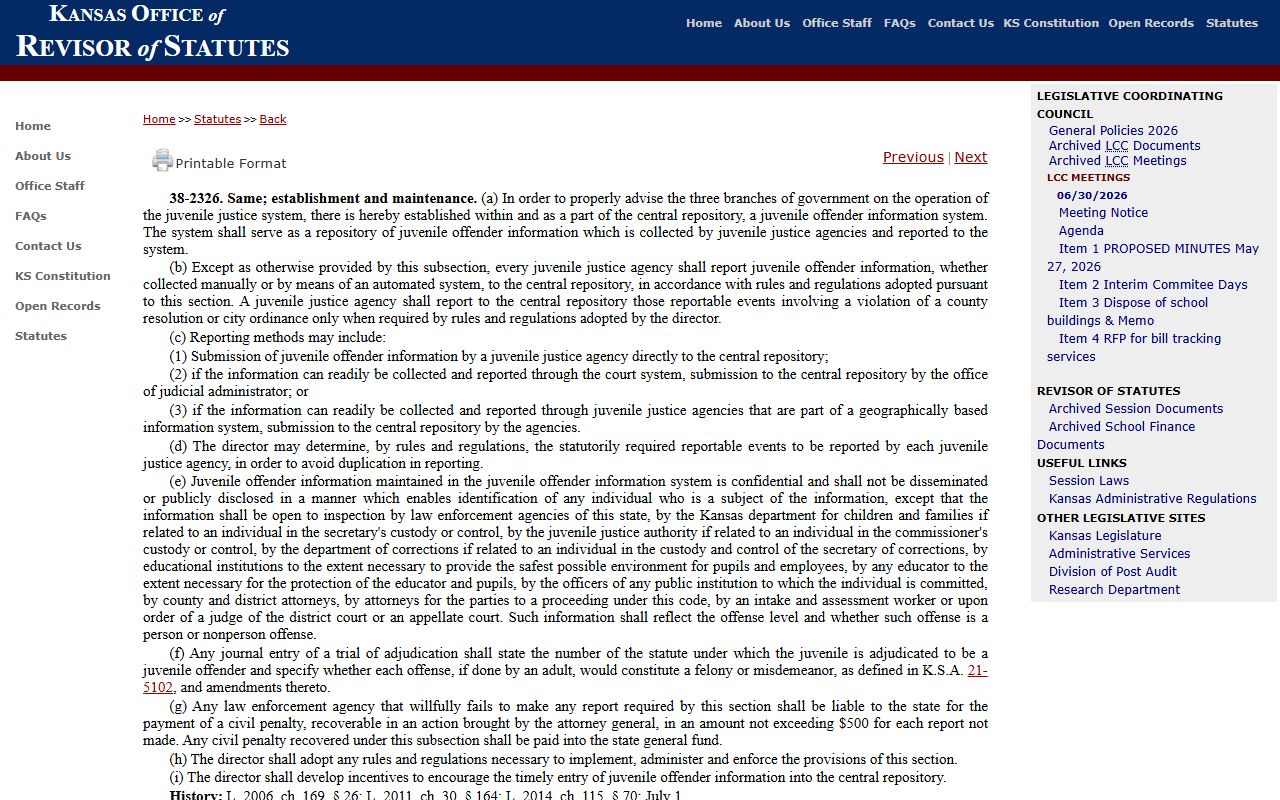
For a guardianship or conservatorship case, the public docket and the confidential file may not contain the same level of detail.
Cherokee County Probate Court Context
Most Cherokee County probate records stay in the Kansas district court system. Federal courts are relevant only when a separate federal matter exists, such as bankruptcy, federal litigation, or an appeal from a federal court. The probate case itself remains a state District Court function unless a distinct federal issue creates a separate federal case record.
The District of Kansas Wichita courthouse page is a successful probate manifest image, but it should not be confused with the local probate court. Federal court records are accessed through the federal system, while Cherokee County probate files are requested through the Clerk of the District Court.
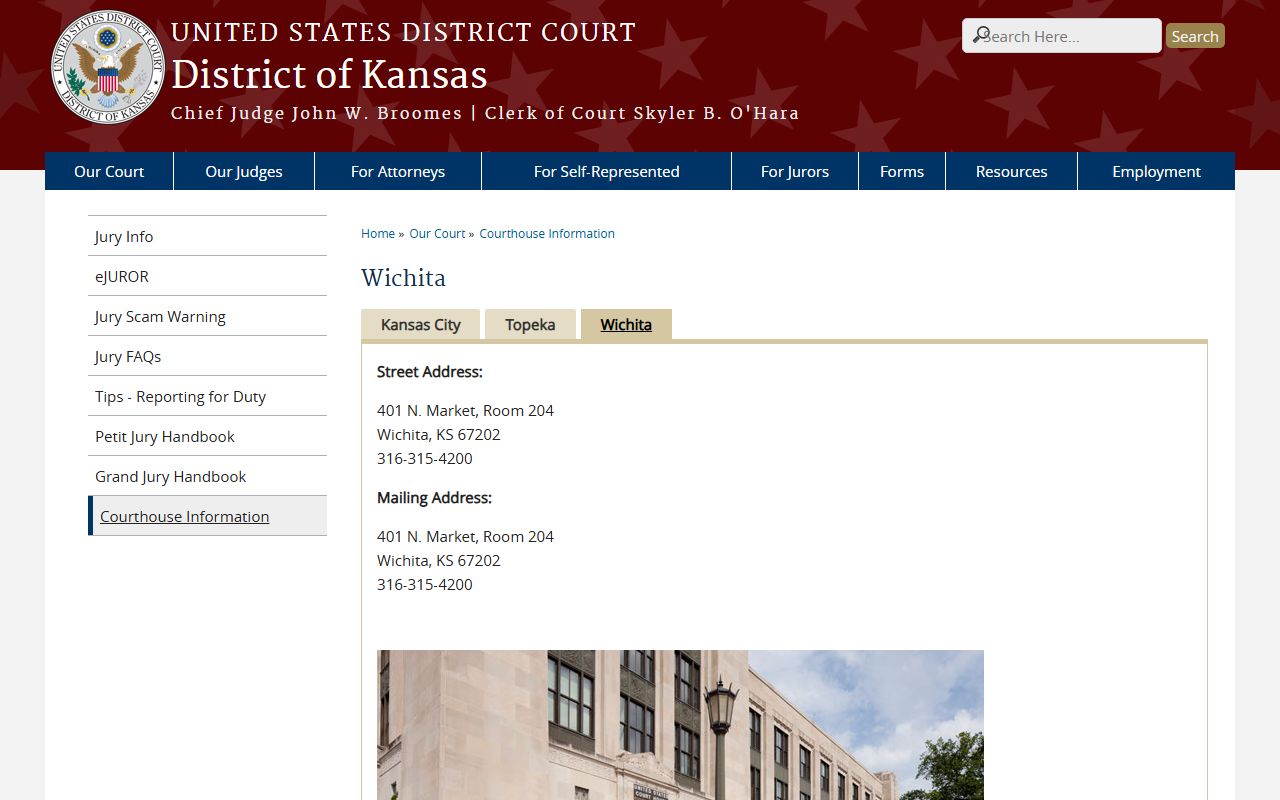
The practical rule is simple: estates, wills, guardianships, and conservatorships tied to Cherokee County start with the Kansas District Court, not the federal courthouse.