
Cherokee County Criminal Court Records
A criminal court record is the case file kept by the court after charges are filed. In Cherokee County, the District Court handles felony cases and many serious misdemeanor or state-law criminal cases. The Clerk of the District Court is the records custodian for those criminal case files. The court record can show the charge as filed, bond orders, hearings, pleas, motions, warrants once public, disposition, sentencing, probation, restitution, fines, costs, and revocation entries.
Municipal courts are part of the local picture but not the same custodian. Columbus Municipal Court handles city misdemeanor, traffic, DUI, animal-control, and code cases. Galena has municipal court contact through official city pages. A city ordinance case may stay in municipal court unless appealed, transferred, or tied to a district court filing. The full Kansas district court record path is broader than the charge-focused page for Cherokee County arrest records and court charges.
The Cherokee County Attorney's Office prosecutes criminal matters for the State of Kansas in Cherokee County.
The prosecutor's role helps explain why a court case file may look different from an arrest or booking record created by law enforcement.
Search Cherokee County Criminal Court Records
Start with Kansas Case Search for public district court criminal case information. Confirmed search options include case number, party name, business name, citation, and role-based criteria. If the case is not visible, is older, needs certified copies, or requires document images, Cherokee County District Court record search requests must be in writing. The courthouse also has a public access computer for available cases.
- Search by case number if the district court case number is known.
- Search by defendant name if no case number is available.
- Confirm the court and case type before relying on a match.
- Read the docket events in order, with attention to the latest disposition or sentencing entry.
- Request copies from the Clerk of the District Court when a document or certification is needed.
The Kansas Criminal History Record Check is separate. It is a fee-based Kansas Bureau of Investigation route through Kansas.gov, with a $30 purchase price noted in the research. A KBI result can be useful for statewide criminal history, but it is not the same as the Cherokee County District Court case file.
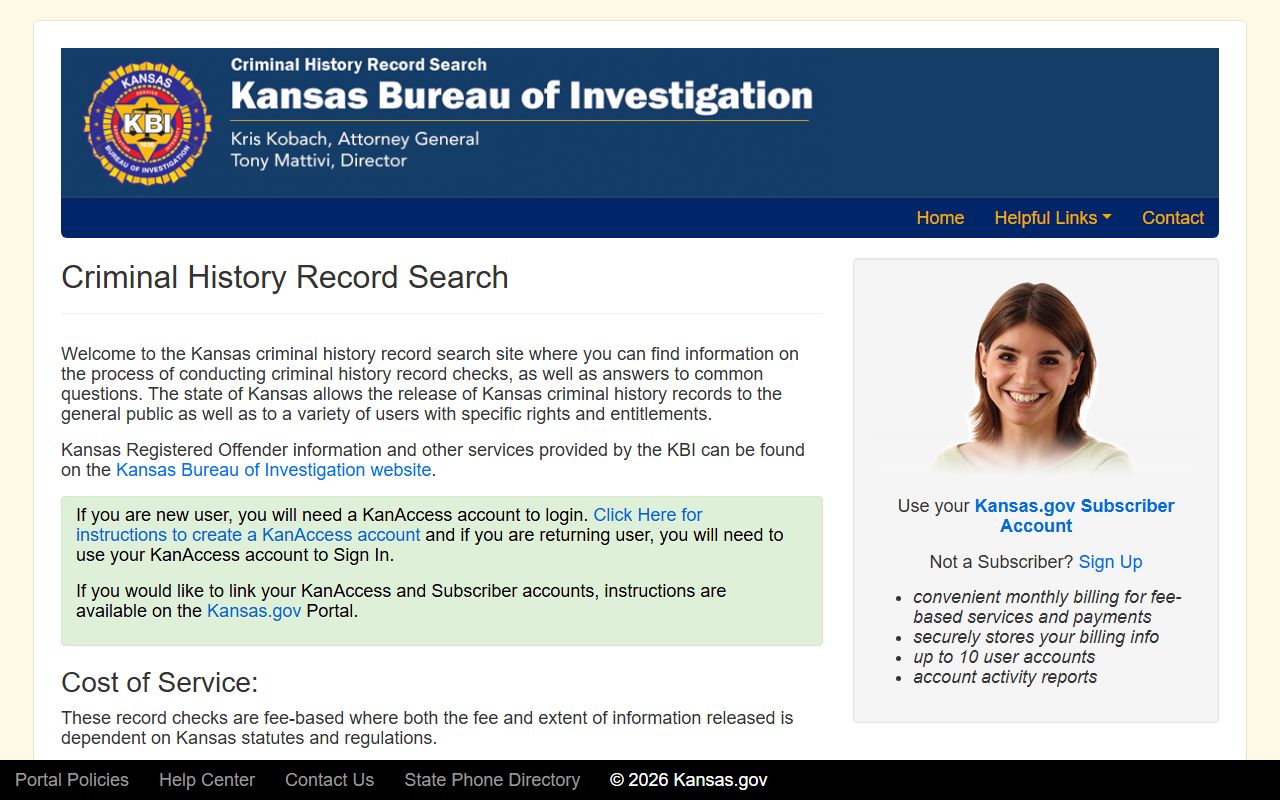
Use the KBI route for statewide history checks and the District Court Clerk for the local court file, copies, and certified court entries.
Cherokee County Criminal Case Stages
A Cherokee County criminal court record grows as the case moves through court. The first public court entries may show the charging document, bond, appearance, or warrant history, depending on access rules. Later entries can show arraignment, motions, plea negotiations, trial settings, disposition, sentence, probation, or revocation. Diversion, if granted by the County Attorney, can suspend prosecution while conditions are completed and can lead to dismissal if all terms are met.
Case flow: Charges Filed › Arraignment › Pretrial / Motions › Plea or Trial › Disposition › Sentencing
| Stage | What Happens |
|---|---|
| Charges Filed | The complaint or information starts the criminal case and lists alleged offenses. |
| Arraignment | The defendant appears, the charge is addressed, and a plea may be entered. |
| Pretrial / Motions | Attorneys file requests, seek orders, discuss evidence, or negotiate plea or diversion terms. |
| Plea or Trial | The case is resolved by plea, trial verdict, dismissal, or another court action. |
| Disposition | The court records the outcome of each charge or the whole case. |
| Sentencing | The court enters punishment, probation, fines, costs, restitution, jail, prison, or other terms after conviction. |
What Cherokee County Criminal Records Show
Criminal court records should be read charge by charge. One case can contain several counts, and each count can end differently. A charge can be amended, reduced, dismissed, diverted, tried, or resolved by plea. The docket timeline is useful, but the disposition and sentencing entries carry the most weight when a user needs the final outcome.
| Field | What It Shows |
|---|---|
| Case Number | The district court criminal case number assigned by the court. |
| Defendant | The person accused in the criminal case. |
| Prosecutor | The County Attorney or assistant attorney appearing for the State of Kansas. |
| Charges | The alleged offenses, counts, severity level, and amendments when public. |
| Bond and Warrants | Release conditions, bond events, bench warrant activity, or warrant execution entries when public. |
| Plea | The defendant's answer, such as guilty, not guilty, or no contest. |
| Disposition | The outcome for each charge, including guilty, dismissed, acquitted, or diverted when reflected. |
| Sentence | Jail, prison, probation, fines, costs, restitution, or other ordered terms. |
| Revocation | Later probation or diversion violation events and court action. |
Charges vs Convictions
A charge is an accusation filed in court. A conviction is a final finding of guilt by plea or verdict. Cherokee County criminal court records can show charges that were later dismissed, reduced, amended, or resolved through diversion. That is why the disposition field matters more than the first charge list when reading the outcome.
| Point | Charge | Conviction |
|---|---|---|
| Meaning | Alleged offense filed by the prosecutor. | Final guilty outcome by plea or verdict. |
| Timing | Appears near the start of the case. | Appears after plea, trial, or final disposition. |
| Can Change | May be amended, reduced, or dismissed. | May be appealed, expunged if eligible, or used for sentencing consequences. |
| Best Record | Charging document and early docket entries. | Disposition and sentencing journal entries. |
The County Attorney about page identifies Kurt Benecke as County Attorney and lists assistant attorneys who prosecute criminal matters for Cherokee County.
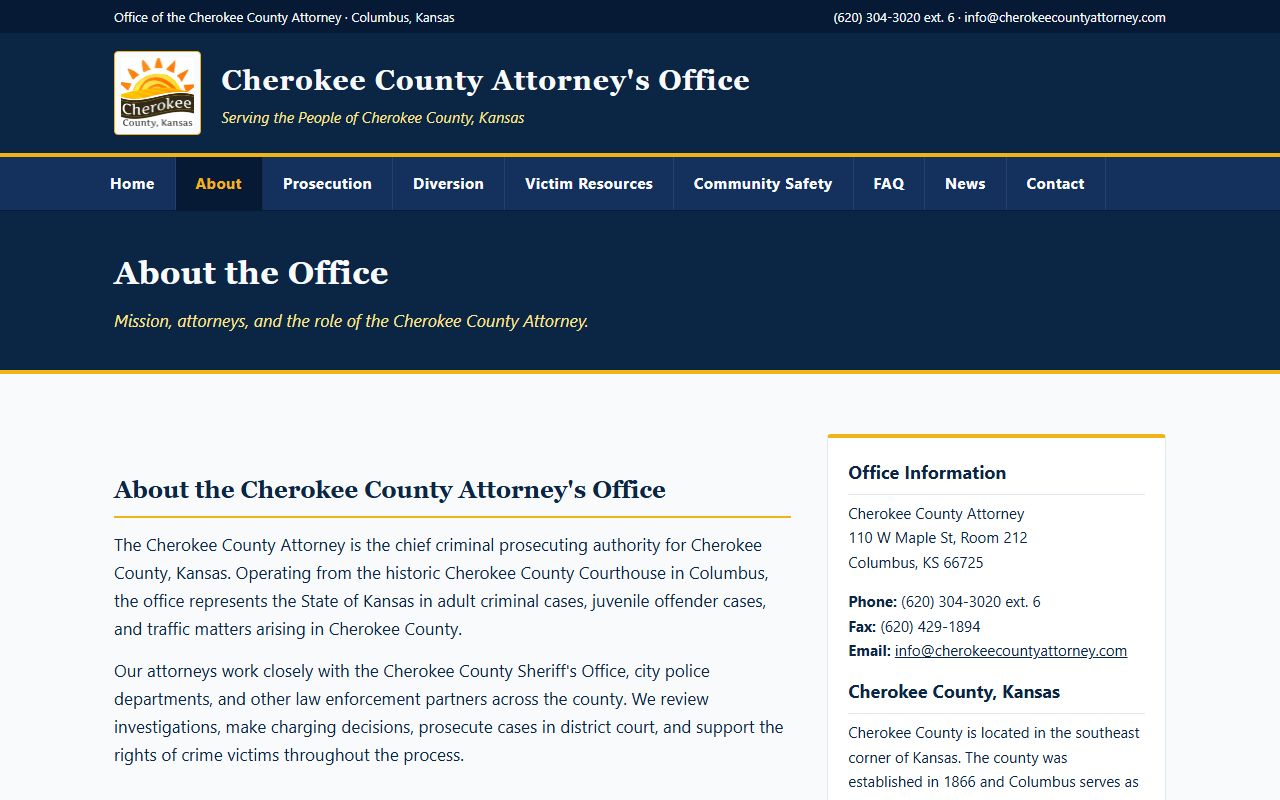
Those prosecutor roles are part of the filing process, while the District Court record shows how each charge moves through court.
County Attorney Criminal Records Role
The Cherokee County Attorney's Office prosecutes criminal matters from law-enforcement investigations across the county, including cases from the Sheriff's Office and city police departments. Official materials list Kurt Benecke as County Attorney, with Addison Tucker and Ethan Manke as assistant attorneys. The office also prosecutes juvenile offender cases and certain traffic offenses, including DUI, driving while suspended, no proof of insurance, and other moving violations referred to the office.
Diversion is one Cherokee-specific alternative to ordinary prosecution. The County Attorney diversion page states that diversion is discretionary and reviewed individually based on factors such as the seriousness of the offense, criminal history, victim position, restitution, and public safety. Application fees listed in the research are $100 for misdemeanor criminal diversion, $150 for felony criminal diversion, $100 for DUI diversion, $50 for traffic diversion, and $25 for fish and game diversion. The deadline is not more than 30 days after arraignment for misdemeanors or first appearance for felonies.
The juvenile and traffic prosecution page shows that the prosecutor's criminal work extends beyond adult felony files.
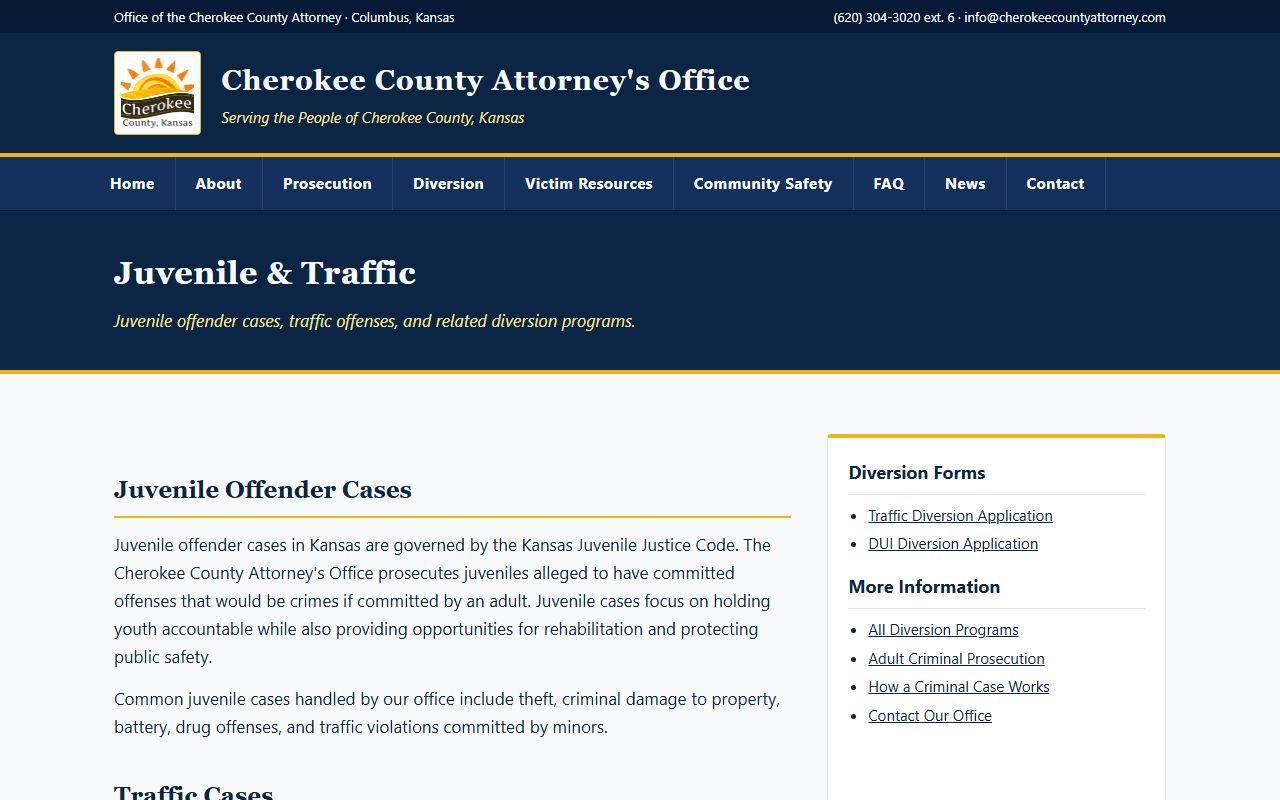
Juvenile prosecution exists, but juvenile offender information is subject to confidentiality rules and should not be treated like an ordinary public criminal docket.
Sealed vs Expunged Criminal Records
Sealed and expunged are related but not identical. A sealed record is closed from ordinary public view by law or court order. An expunged record is limited under Kansas expungement law after the court grants relief for an eligible conviction, arrest record, or diversion. Expungement does not mean every government trace disappears for every purpose.
| Point | Sealed | Expunged |
|---|---|---|
| Source | Statute, court rule, or court order. | Court order under Kansas expungement law for eligible records. |
| Public View | Hidden or limited while sealed. | Limited from ordinary public access after expungement is granted. |
| Examples | Warrant-related criminal or juvenile cases under K.S.A. 60-2617 until execution or denial. | Eligible convictions, arrest records, and diversions under K.S.A. 21-6614. |
| Access Afterward | May be reopened or unsealed if the law or court permits. | Some agencies may still access the record for specific statutory purposes. |
Public Access to Cherokee County Criminal Records
Kansas public access is broad, but criminal court files still have limits. K.S.A. 45-215 is part of the Kansas Open Records Act and states the open-records policy. K.S.A. 45-221 supports exemptions and redaction. Kansas Supreme Court Rule 22 governs public electronic district court and appellate case records. These rules work together with confidentiality statutes.
Juvenile intake and juvenile offender information is confidential under Kansas juvenile statutes, including K.S.A. 38-2310 and related rules. Certain warrant and subpoena materials can be sealed under K.S.A. 60-2617. Eligible convictions, arrest records, and diversion agreements may be expunged under K.S.A. 21-6614.
Note: Online absence does not prove a criminal case, warrant, juvenile file, or sealed matter does not exist.
Victim Notice and State Checks
Victim notice and criminal history checks are separate from the court case file. The County Attorney victim resources page references Kansas VINE, Safehouse Crisis Center, CHC/SEK Forensic and Victim Services, and statewide victim support lines. VINE can provide custody-status and criminal-case notifications, but it does not replace a court docket or certified criminal disposition.
The County Attorney victim resources page is a local source for victim support contacts and VINE information.
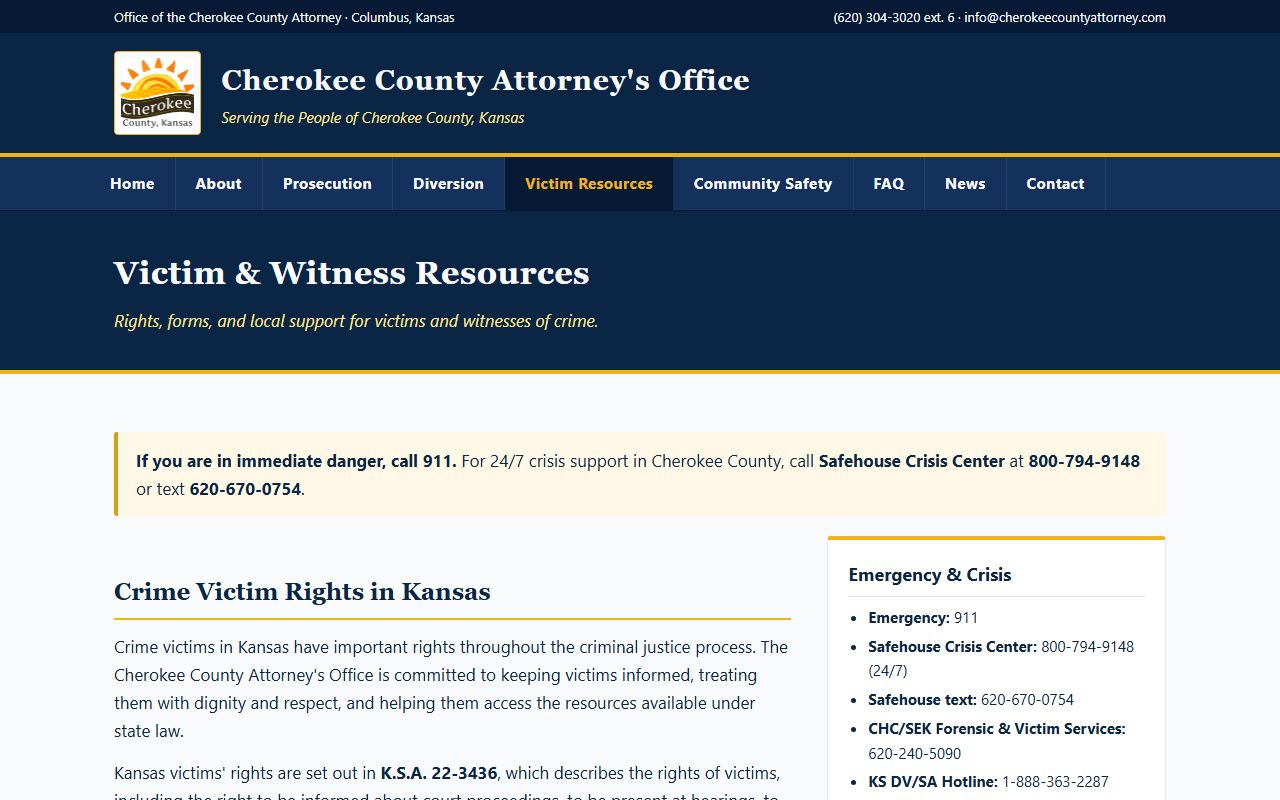
Victim notification tools help track custody and case updates, while the District Court file remains the source for the criminal case record.
The Kansas Bureau of Investigation provides statewide criminal history and registered offender access points.
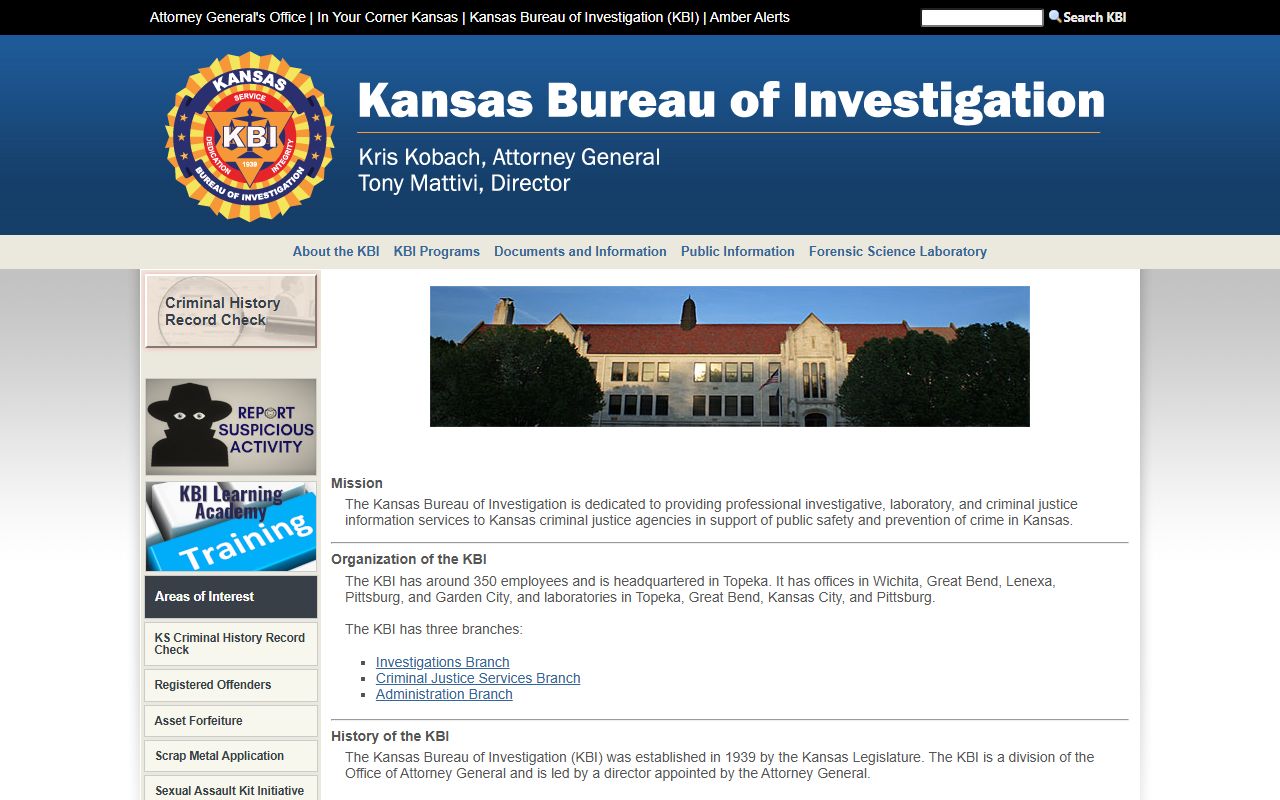
KBI results and local court records may not be identical because they serve different record systems and update paths.